• About Us
    • Introduction
    • History
    • Location
    • Certification
    • Patent
  • System/Consulting
    • Smart Variable Air Volume Smoke Control System
    • Smart Zoned Smoke Control System
    • Variable Air Volume Control System
    • Pressurized Elevator Shaft Smoke Control System
  • Design
    • Fire Protection Design
    • BIM
  • Test/Inspection
    • Fire Protection TAB (Testing, Adjusting, Balancing
    • Zoned Smoke Control TAB (Testing, Adjusting, Balan
    • Hot Smoke Test
    • Door Fan Test
    • Duct Leakage Test
    • Damper Leakage Test
    • Pressure Drop Performance Test
  • Product
    • Flap Damper
    • The exhaust window
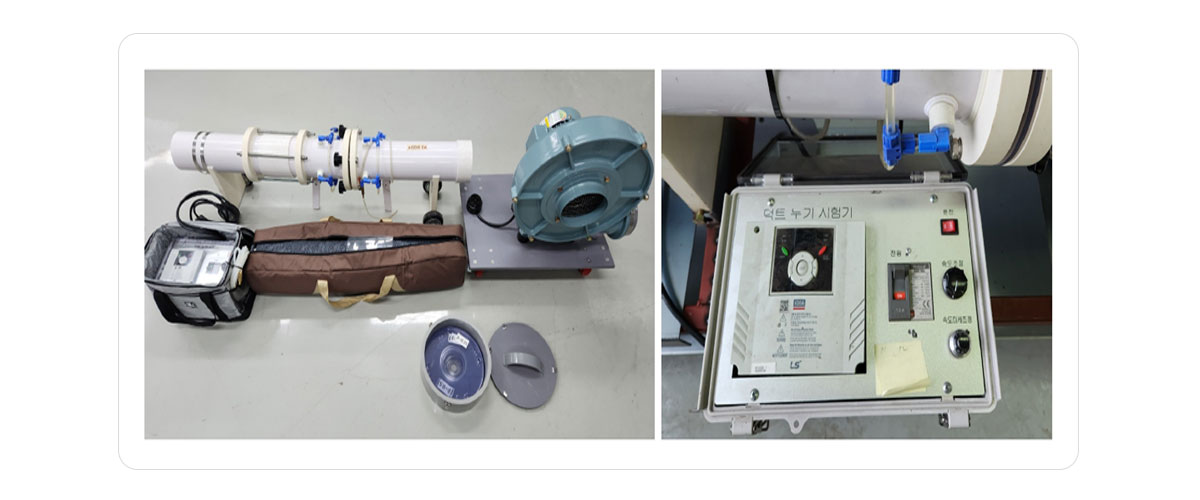
    • Duct Leakage Test Equipment
    • Living room smoke M.D / Living room smoke M.V.D
    • Fire damper
    • Duct type line pitot tube
    • Inlet air discharge exhaust damper
    • Bell mouth suction side line pitot tube
  • Promotion
    • Domestic exhibition
    • International exhibition
    • Education
    • Sharing Management
    • In-house event
  • Customer center
    • News/Notice
    • reference Room
    • inquiry
Test/Inspection
Duct Leakage Test
Share
Document

Duct Leakage Test

Duct sealing conditions vary based on duct fabrication, assembly, and construction methods. Conducting a duct leakage test on-site helps identify and minimize leaks by improving construction methods if failures are detected.
Test Guidelines

  • To assess the adequacy of ductwork construction, initiate the duct leakage test by installing a segment of initial vertical ductwork. This test is conducted to inspect the workmanship of the installer and emphasize key management points for quality control.
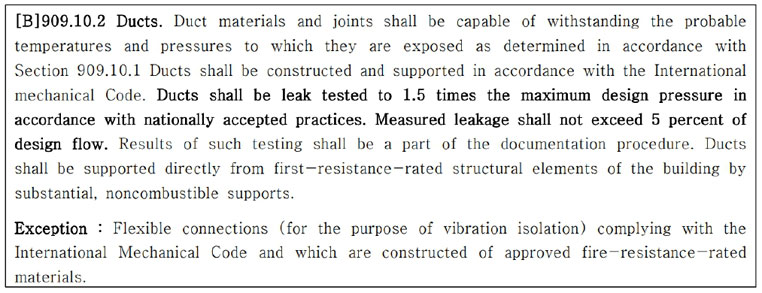
  • The testing criteria are based on IBC CODE, with the test pressure set at 150% of the fan's design pressure, and leakage within 5% is considered acceptable. (Reference: Supplementary information from Section 2.4 of Compartment TAB Procedure, Korean Society of Fire Protection Engineers)

Duct Leakage Test IBC CODE original text